Ola!
Destination: Lisbon
Dates: March 2019
Nights: 2
Hotel: The Altis Grand Hotel
Highlights: Hospitality, food, affordable,transportation and weather
Lowlights: Buildings in disrepair and lack of information on tour buses
Olá bom dia!
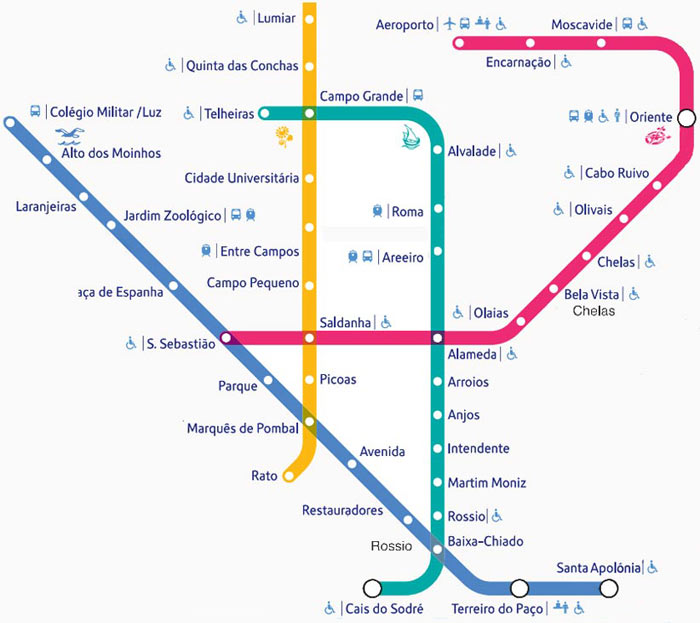
Lisbon is so close to the airport and has been one of the easiest and cheapest ways (only €1.50) to get from and to. The Metro is on the right as soon as you step out of the airport. You will have to purchase a Viva Viagem card for 50 cents from the Bilhetes e passes machine and top up €1.50 to get into the city centre. The great thing about their transport system is that 1.50€ is valid for up to an hour on all transportation. You can top your card up at any station in Lisbon.
The metro is clean and easy to follow. Our hotel was close to Rato, but we decided to get off at Sao Sebastiao as it was a short walk to Parque Eduardo VII.
Park Eduardo VII.
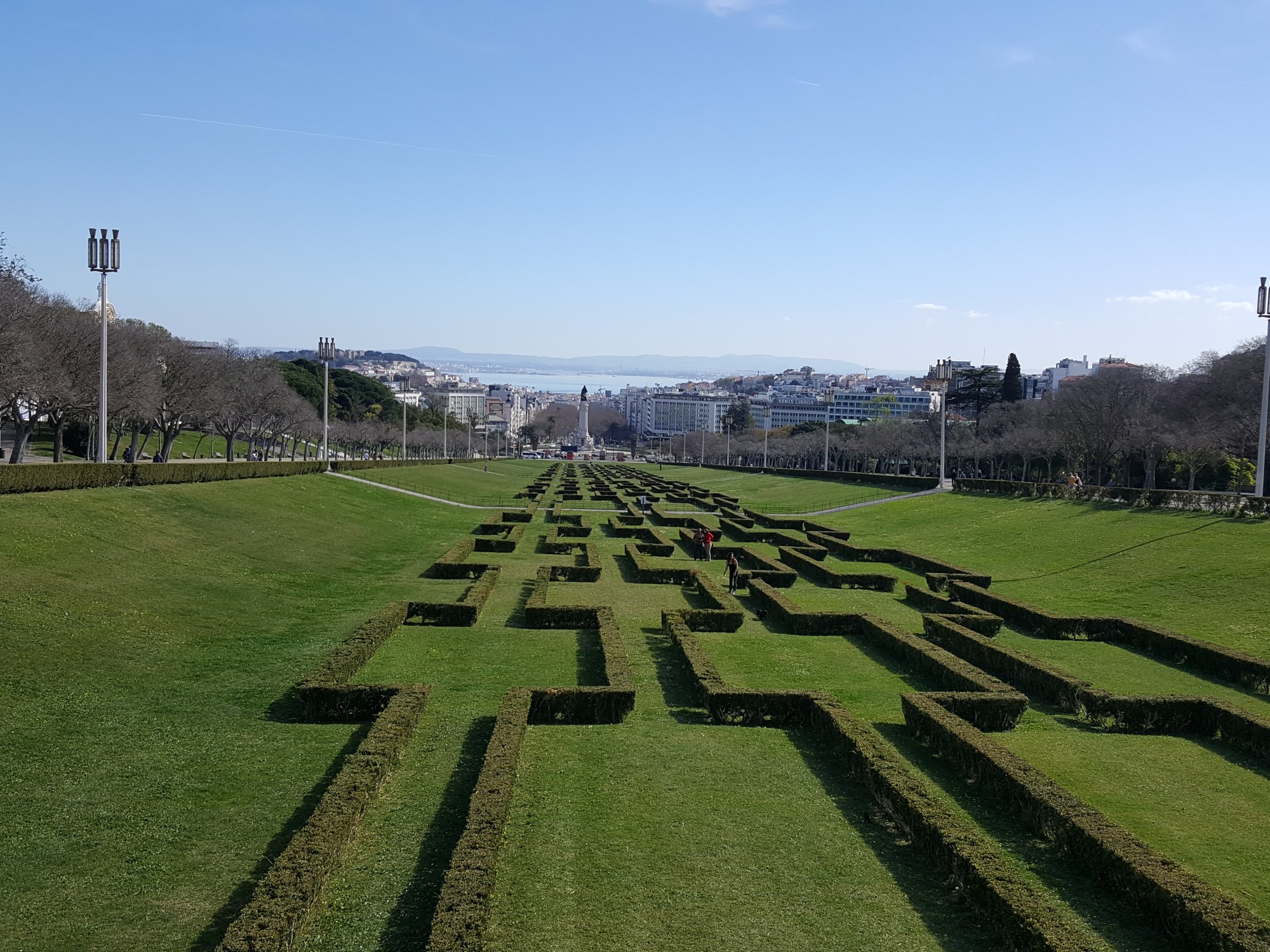
It’s a public park and was given its name when Edward VII of the United Kingdom visited Portugal in 1902 to help strengthen the two countries’ relationship. From here, you can see an amazing view of Lisbon’s town centre.


Marquis of Pombal Square.
Is the roundabout located between Parque Eduardo VII and Avenida da Liberdade ( The famous boulevard with high-end shops) It is also where the white monument of the powerful prime minister Sebastião José de Carvalho e Melo is erected. All the big cities seeing tour buses start and finish in the square. Prices range from 20-28 euros depending on how many lines you want to do.

Our hotel was not far from the roundabout. We stayed at The Altis Grand Hotel Lisbon. The hotel was located just off the main road of Avenida da Liberdade. It was a grand hotel, with amazing hospitality from all the staff. It was a 20-minute walk from our hotel to Terreiro do Paço, the main square in Lisbon. If you want to be a little closer to the action, then I suggest staying in Baixa-Chiado or Alfama.
Exploring downtown
After a quick freshen up, we headed downtown to check out Lisbon. The first stop was Lisbon Tourist Centre, which had a lot of information on things to do and prices. Also, pick up your free map. We were on the search for a restaurant called ‘O Chefe e o Mar’ as it was number one on Trip Advisor.


O Chefe e o Mar is located in the back streets of Martim Moniz. Great restaurant, especially if you’re a fan of fresh fish dishes. I had black swordfish with vegetables and potatoes.


After dinner, we headed down to Terreiro do Paco to enjoy a coffee and watch the sunset behind the famous Point 25 de Abril bridge.


Day 2. Tram 28, Castles, and lost in Alfama.
There is always a queue when trying to get on Tram 28. Also, be prepared to get harassed by the tuk-tuk men who will say anything to put you off getting on the Tram, but we were dedicated. Tram 28 is only €2.90 onboard, but €1.45 if you use your Viva Viagem Card. Luckily we got sent to the back where you can see the best views. **WARNING** no such thing as health and safety on these trams, there is nothing to hold on to at the back so be prepared to get to know your fellow riders real good.


The ride was fun and fast, I can see how you can get pick-pocketed especially when the driver slams on the breaks. Fortunately for us, it wasn’t packed and we were the only group at the back.
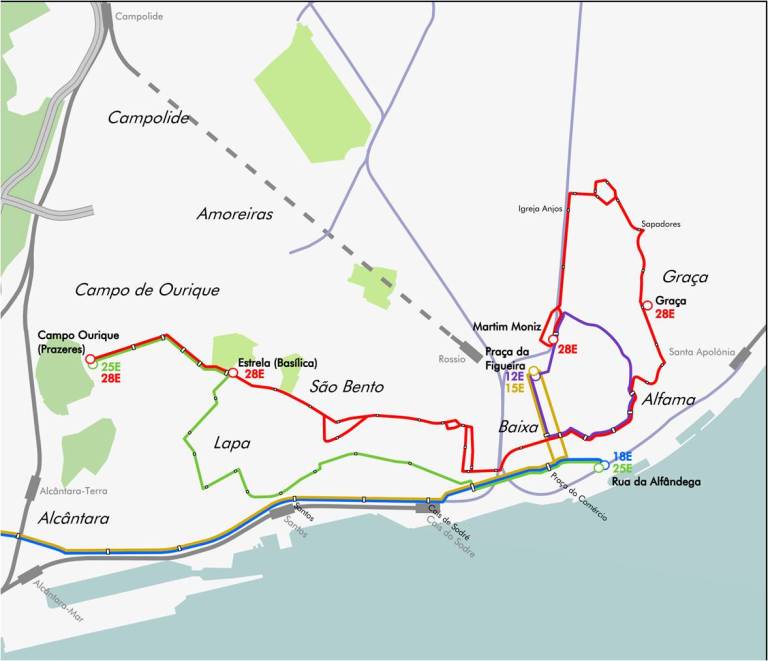
The red line above shows you tram 28’s route. It starts from Martim Moniz square (just look out for the long queue), Graca, Portas de Sol, Se Cathedral, Rua Conceição (southern Baixa), Chiado, Sao Bento, Estrela and finishes in Campo Ourique (Prazeres). We were advised to get the tram at 8am, but we got in line at 10am and waited for 30 minutes.


The tram is a good way of seeing places you want to explore more of. We stayed on the tram till the end. The final stop is the Prazeres Cemetery (Cemitério dos Prazeres) the largest cemetery in Lisbon, where many famous Portuguese artists, authors, and government figures are buried.


After we explored the cemetery and paid our respects, we decided to have lunch just outside, in the Jardim dos Prazeres and watched the hustling of people getting off and on the Tram.
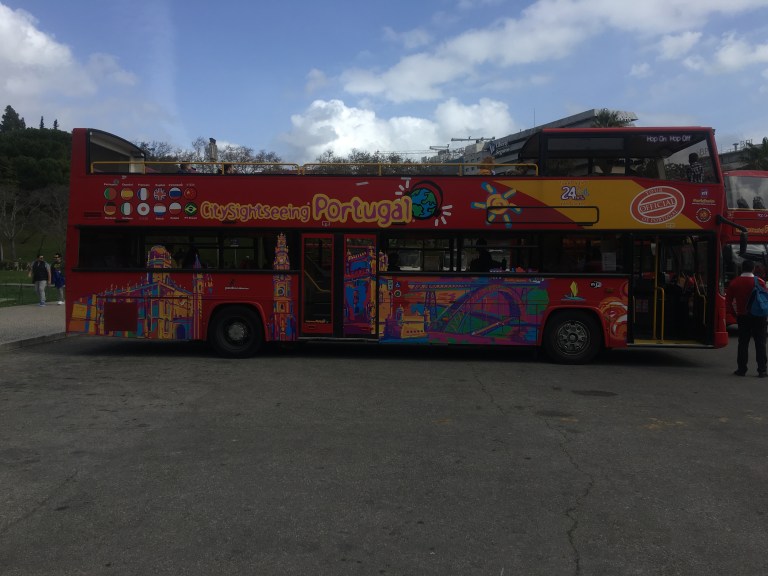
We walked down to Basilica da Estrela to catch our City Seeing Bus. The City Sight Seeing Bus costs around 20-30 euros, depending on what route you want to do. The tickets are valid for 24 hours.
There are 3 lines:
Green (Verde)– Panteao Nacional-Castelo de S. Jorge- Igreja da Graca- Se Catedral
Red and Blue (Vermelha e Azul)- Mosteiro dos Jeronimos- Torre de Belem- Oceanairo- Parque das Nacoes.
Red, Blue, and Green (Vermelha, Azul e Verde)- Gare do Oriente- Padrao dos Descobrimentos- Praca do Comercio- Museu do Fado
We went with the Red and Blue line (22 euros), as we wanted to go Torre de Belem to get a taste of those famous Portuguese tarts.


We got off at Museu de Marinha, which is a beautiful building and walked down Rua de Belem to find the famous Pastels de Belem cafe, which became apparent by the queues.


The queue is for takeaway only. We were told to go inside and sit down as it’s less busy. Grab a coffee and enjoy a freshly baked pastry. On the way out we decided to grab a few for the hotel. There is a market that occurs in the Jardim Vasco do Gama (the park opposite), every Sundays. You can work on your haggling skills and pick up some cool traditional Portuguese items as souvenirs.
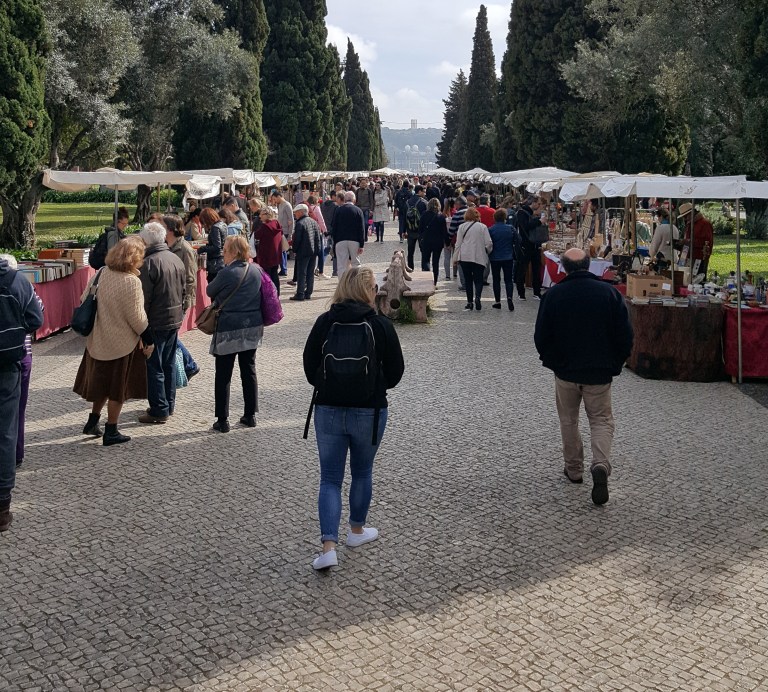 If you carry on walking down towards the end of the market, you will see a Thai Shrine on the right. From the information on the plaque in front of the pavilion, this was a tributary gift to Portugal from the Thai government. The Thai Pavilion was inaugurated by Her Royal Highness, the Princess Maha Sirindhorn in 2012, and represents a token of friendship and recognition of 500 years of diplomatic relations between the two countries.
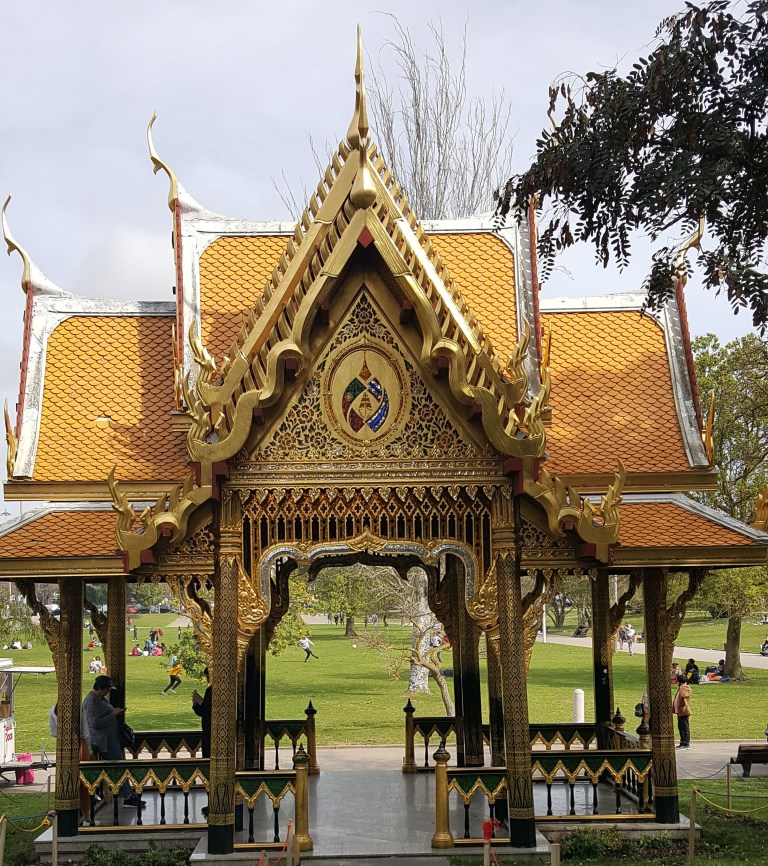 Once we were done admiring the shrine, we carried on walking towards Padrao dos Descobrimentos, the statue built in 1940 and made permanent in 1960 to mark 500 years since Henry the Navigator’s death. It costs 7 euros to go to the top and get a birds-eye view.


We hopped back on the red line and got off at Stop 19 (Rua do Comercio) and jumped on the blue line to Stop 8 (Terminal de Cruzeiros) to explore Alfama.
Alfama is Lisbon’s oldest areas. The best way to explore Alfama is to put your map and phone away and get lost in the small, steep streets.


Sao Jorge Castle is a historic castle located at the top of Sao Jorge Hill, close to Alfama. The entrance is €10 per adult and free for under 12’s. Built-in the 5th century, then modified in the 11th century and finally completely restored in 1938. The castle can be seen from pretty much everywhere in Lisbon, day and night. The castle has 11 towers, a museum, a bar, and a restaurant. My favourite thing was the view from the top of the fortress.


Whilst walking around we found a small restaurant called Petisqueira Conqvistador. It was a tiny, cosy place and luckily they had a table for us. They served great Portuguese food in a tapas-style so you can try a variety of dishes. I had the octopus salad and the chorizo and cabbage soup.


As evening fell, we carried on exploring and we discovered a terrace with a view called Miradouro das Portas do Sol. We were lured in by the sound of happy music and people dancing. We grabbed a Sagres and a table and watched the band play and tourist dancing.


After the band had finished, everyone else started to leave. We decided to go back to the hotel. On the way, in between the buildings we found ‘The Santa Justa’ lift, it stands 45 meters tall and it was built in 1902 to transport locals from upper to lower Lisbon and vice versa. The queues at that time were still long, so we decided to skip it as we had already seen the breathtaking views from the top. It costs €5.15 (return)


Day 3. Time to say adeus.
It was our last day, but we didn’t have to leave till 6pm. So we thought we would make the most of the last, sunny day. Our bus passes were still valid until 3pm, we thought we would explore the blue line that takes you around the business district. Personally, it was a waste of time as I wanted to see buildings that had character, being a city girl I can see modern buildings, newly built shopping malls and train stations every day. We got off near the square to see the famous pink street.


Once known as Lisbon’s Red Light District, it was popular with sailors who came here to gamble, drink and ‘get lucky’. Painted pink in 2011 to create a better neighbourhood, it is now known as Lisbon’s nightlife district, with plenty of bars and clubs to drink and ‘get lucky’.
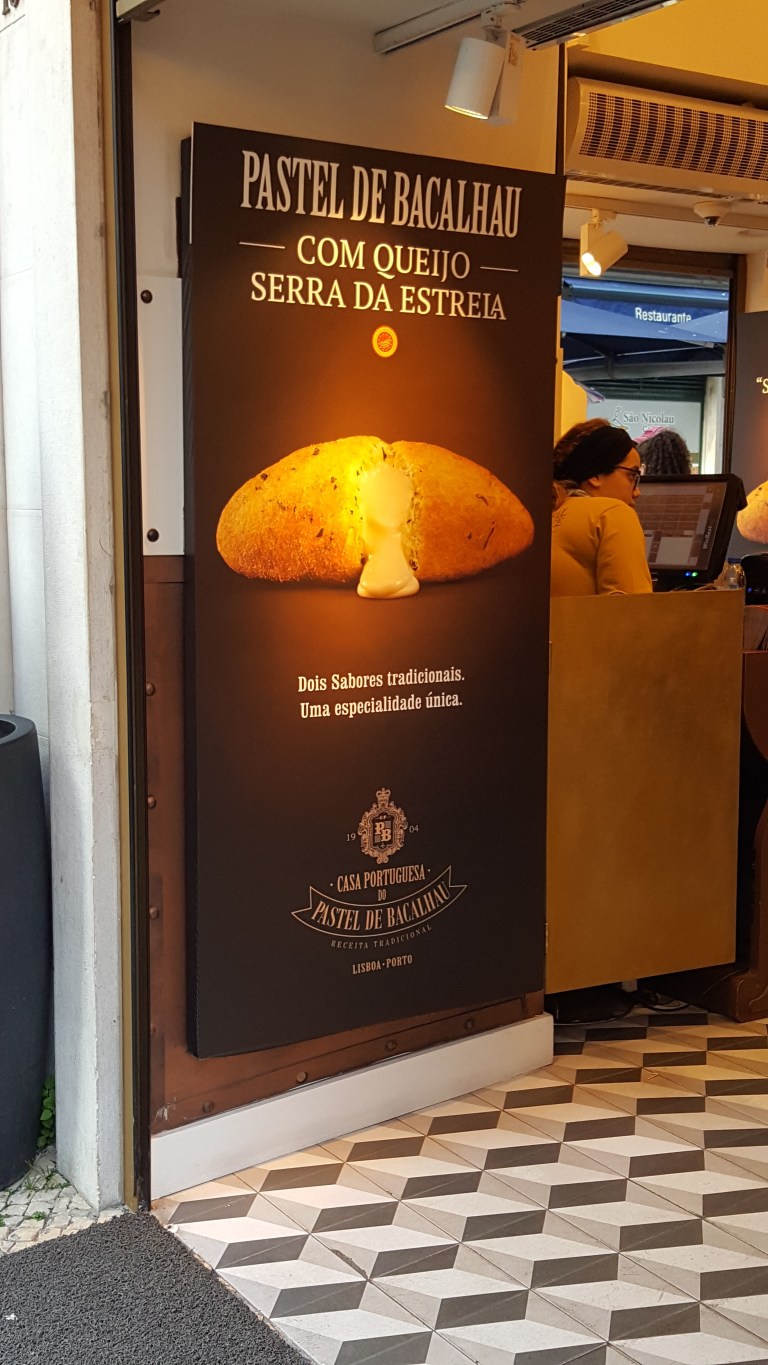
We grabbed a traditional ball of fried cod from Casa Portuguesa do Pastel de Bacalhau.
Our last stop was the Lisboa Story Centre, to find out about the history of Lisbon. It costs 7 euros to get in and lets you explore in an interactive manner. It was worth a visit as you get to experience 6 exhibition areas with a lot of information about the city.
Our time in Lisboa had come to an end. We had one last coffee outside the Lisboa Story Centre and admired the view of Praca do Comercio before we took the Metro back to the airport.
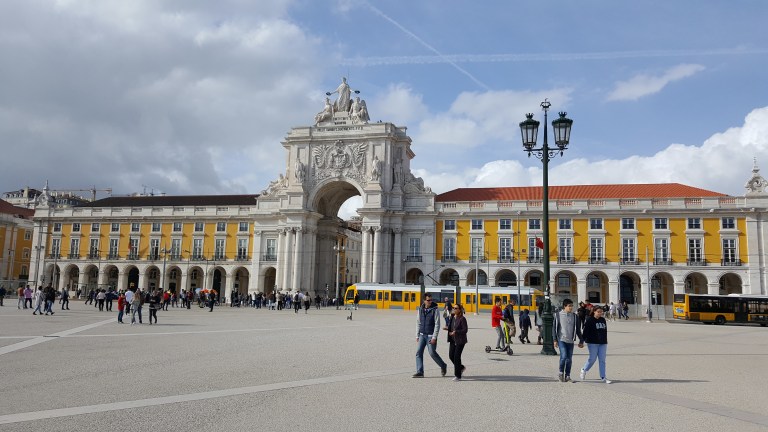
Lisbon has the feel of a once-great city that has sadly been abandoned in some areas with graffiti tags, derelict buildings, and some dodgy places at night. Nevertheless, I would still recommend seeing this vibrant and inexpensive city, where you can eat, drink and discover things without breaking the bank. Lisbon is a safe city to walk around, especially during the day. People are warm, welcome and very helpful.
 The Travel Bug